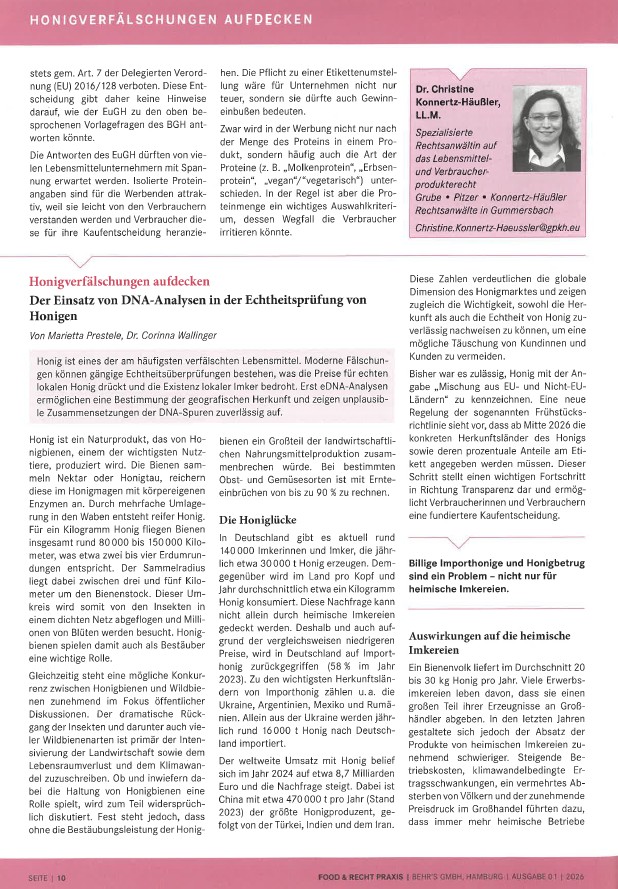
We had the opportunity to write an article for the trade journal *Food & Recht* (Issue 01/2026). In it, we address a highly topical issue: honey is one of the most commonly adulterated foods worldwide. This is particularly relevant in light of the new Breakfast Regulation.
The latest regulatory developments aim to create greater transparency for consumers, for example through stricter labelling requirements regarding the origin of honey. At the same time, however, it is becoming apparent that modern counterfeiting methods have become so sophisticated that they can even pass standard authenticity tests. This complicates the practical implementation of the regulation and increases the pressure on honest, locally operating beekeepers.
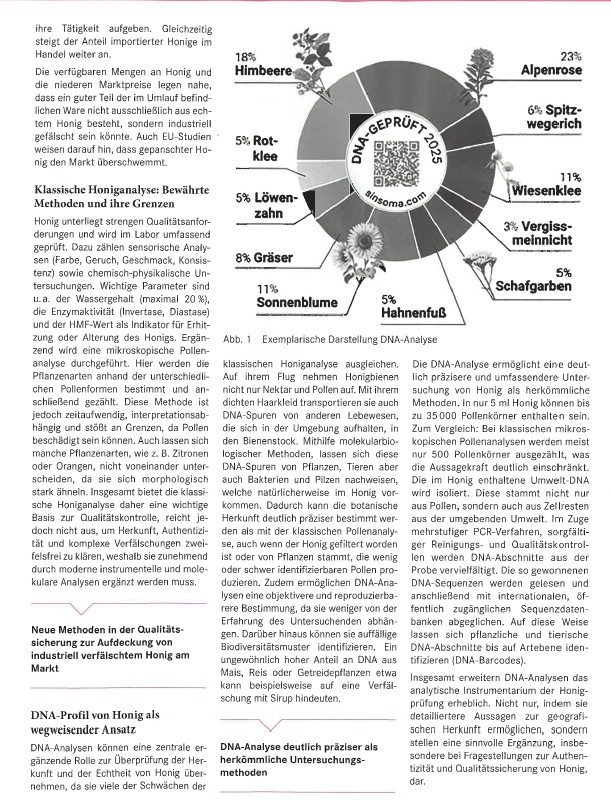
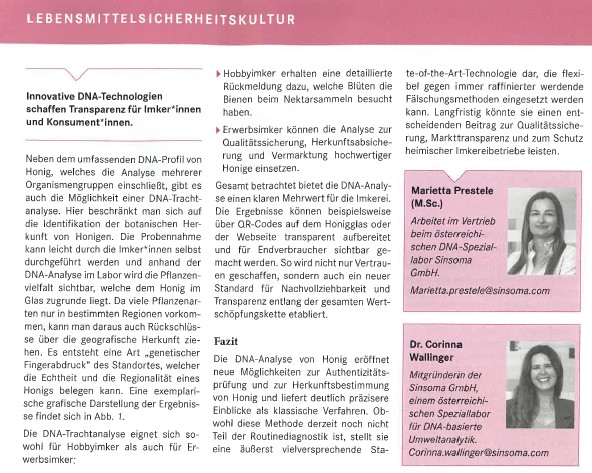
In our article, we examine the challenges this presents and which solutions could play a key role in the future. We place particular emphasis on eDNA analysis: this innovative method allows the geographical origin of honey to be precisely determined and checked for plausibility on the basis of DNA traces – a decisive step forward in the fight against food fraud.
If you would like to find out more about this fascinating topic and the implications of the new breakfast regulation, read our full article in *Food & Recht Praxis*, issue 01/2026.