Bedbugs don’t even spare remote places
Mountaineering, hiking and staying in mountain huts are all about experiencing nature, adventure and relaxation. Yet even in remote accommodation, an uninvited guest may turn up: the bedbug.
The Alpine clubs are currently raising awareness of the growing problem of bedbugs in mountain huts and are launching a joint information campaign. The aim is to raise guests’ awareness of the issue and to work together to prevent the problem from spreading further.
It is important to note that bedbugs are not a sign of poor hygiene. They can be found anywhere – in hotels, holiday accommodation, on public transport and even in remote accommodation such as mountain huts. They can be carried from place to place unnoticed via luggage and clothing.
The risk: the rucksack comes along for the ride
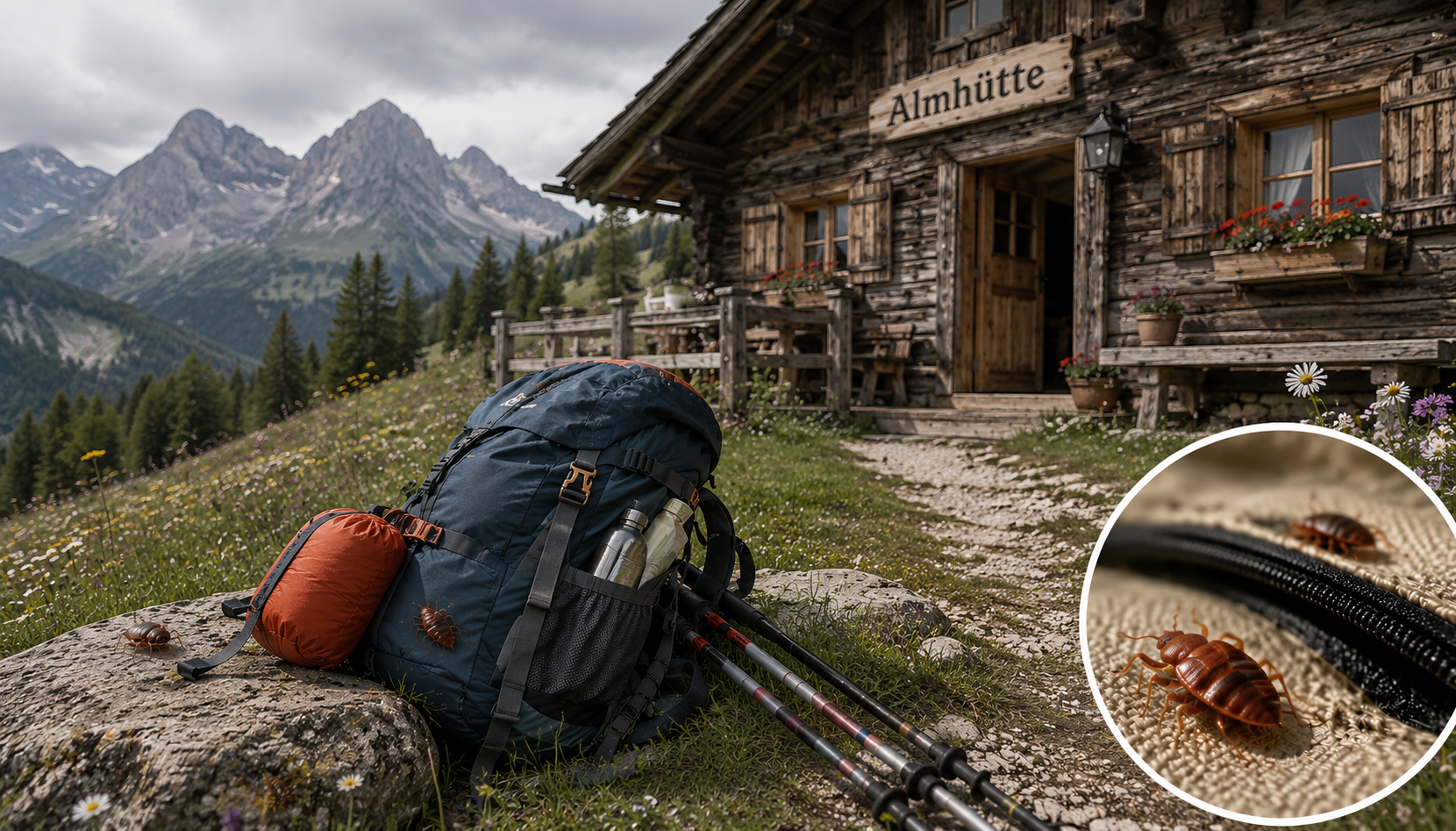
There is a particular situation when it comes to staying overnight in mountain huts: many guests regularly change where they sleep, travelling on with their rucksacks, sleeping bags and outdoor kit, and taking these items with them from one accommodation to the next.
This does not only apply to traditional mountain huts. Other so-called ‘remote places’ – such as isolated accommodation, trekking lodges, nature lodges, camps or simple hostels – may also be affected. Wherever large numbers of people stay overnight with luggage and carry their equipment onwards, there is always a risk of the disease being spread.
Can I bring bedbugs home without realising it?
Yes, that is possible. Bedbugs can be brought home unnoticed after a night in a mountain hut, via clothing, rucksacks, sleeping bags or other items of kit. You should therefore wash all washable textiles at a temperature of at least 60 °C where possible and check your luggage carefully. However, as many items cannot be washed, a PCR test for bedbug DNA can provide early reassurance and help to detect any infestation in good time.
How can I tell if I’ve brought bedbugs home with me?
Bedbugs are often difficult to spot after spending the night in a mountain hut, as they hide in the tiniest of nooks and crannies during the day. Check your rucksack, sleeping bag and kit for insects, dark droppings or moulted skins.
The insects can hide well or may still be very small, so a visual inspection alone can be difficult. It is therefore advisable to carry out a PCR test for bedbug DNA at an early stage.
After spending the night in a mountain hut: what can you do?
After spending the night in a mountain hut or remote accommodation, it is advisable to:
- Wash clothes and washable items at a temperature of at least 60 °C where possible.
- Check your rucksack, sleeping bag and equipment carefully.
- Do not unpack your luggage directly in the bedroom.
- Take extra precautions, particularly with items that cannot be washed.
A PCR test can provide reassurance at an early stage
A visual inspection alone is often not enough, as bedbugs are nocturnal and are good at hiding.
Precisely because rucksacks, shoes, sleeping bags and other items of kit often cannot be washed, a PCR test for bedbug DNA can be a sensible preventative measure. It can provide early indications of a possible infestation and help to detect it before bedbugs spread throughout the home.
After all, the earlier an infestation is detected, the easier it is to deal with.


IN PARTNERSHIP WITH THE GERMAN AND AUSTRIAN ALPINE CLUBS
Note: An infestation is often difficult to detect, as bedbugs are nocturnal and avoid light.
A PCR test can provide certainty at an early stage:
-
Bedbug PCR-test for home use
€ 94,00
Includes 20% MwSt.Plus shippingDelivery Time: About 1 weekAdditional costs (e.g. for customs or taxes) may occur when shipping to non-EU countries.Add to cart -
Bedbug PCR-test for trade/hotel industryPlease enquire about the price!Delivery Time: About 1 weekAdditional costs (e.g. for customs or taxes) may occur when shipping to non-EU countries.Read more