

When people think of bedbugs, many immediately associate them with poor hygiene or dirty accommodation. However, this is a common misconception.
Bedbugs can, in principle, be found anywhere – even in very well-maintained hotels and high-quality accommodation. When travelling in particular, there is a risk that these tiny parasites will find their way into your luggage unnoticed and then be brought home with you.
With a little knowledge, it is easier to assess the risk. And anyone who is unsure after a trip can have their home checked specifically for a possible infestation.
Why are bedbugs often only discovered at a late stage?
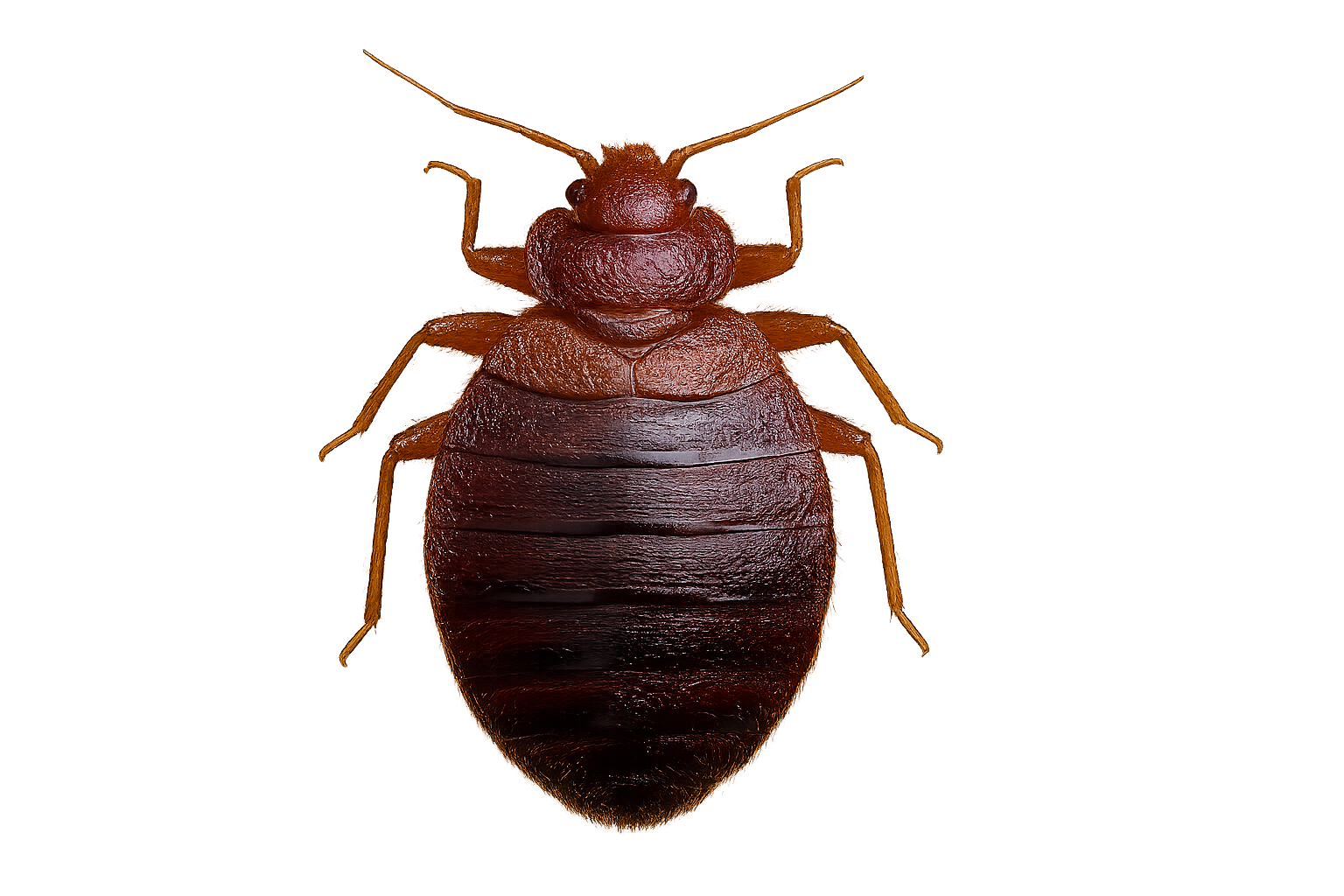
Bedbugs are true masters of concealment. Adult bedbugs are only about 5 to 6 millimetres long and have a flat body. This enables them to hide in the tiniest cracks and crevices. Young bedbugs and eggs are even harder to spot.
This is another reason why a bed bug can easily travel unnoticed: it can hide, for example, in the seams of a suitcase, between items of clothing or in other personal belongings. Eggs and nymphs are also small and can easily be overlooked.
This means that you can return from holiday without ever having seen a bed bug – and still have brought one home without realising it.
How do bedbugs get from the hotel to your home?
The typical scenario goes like this:
Hotel → suitcase → home → new hiding places
Bedbugs do not stay on people all the time. During the day, they hide in the vicinity of where people sleep and come out at night to feed on blood.
When travelling, they can find their way into suitcases, bags, clothing or other personal belongings. When the luggage is subsequently unpacked at home, the insects can find new hiding places there.
What makes them particularly treacherous is that a single insect that has been brought in may initially leave no visible traces at all.
Do I have bedbugs, or are they just mosquito bites?
This is one of the most frequently asked questions – and, at the same time, one of the most difficult.
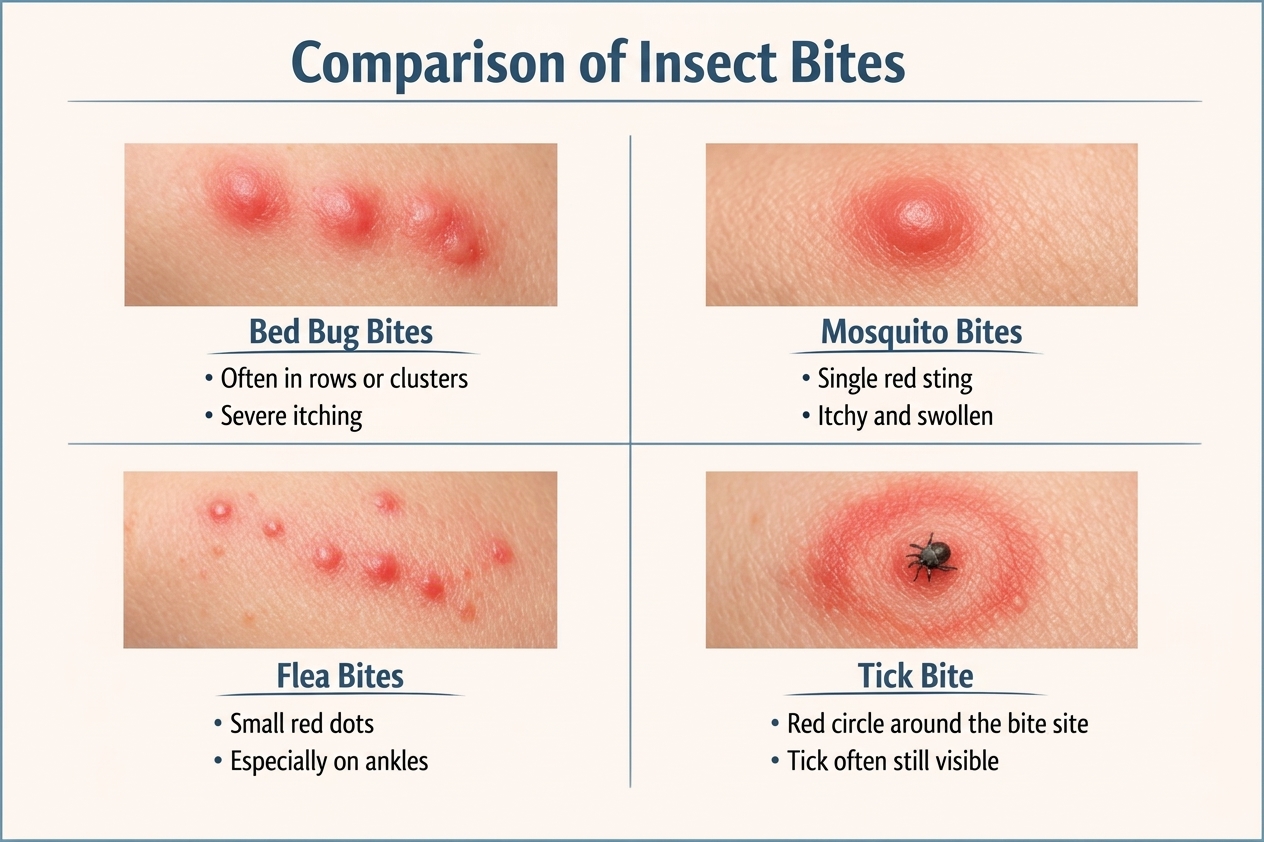
Bedbug bites can, for example, appear as small red, itchy spots, pustules or welts. It is common to see several bites next to one another or in a row.
However, the typical ‘bite pattern’ is not definitive proof of bedbugs.
Skin reactions can vary greatly from person to person. Some people show little or no reaction, whilst others experience clearly visible and intensely itchy reactions. Furthermore, skin reactions may occur with a time lag – in some cases more than a week after the bite.
For this reason, even an examination at a pharmacy, by a GP or a dermatologist does not automatically constitute clear evidence of a bedbug infestation. The Federal Environment Agency expressly points out that skin reactions do not allow for a definitive diagnosis of a bedbug infestation – not even by a dermatologist.
How else can you tell if there’s an infestation?
As well as skin reactions, there are other signs that may indicate the presence of bedbugs:
- small black traces of faeces on the bed or furniture
- shed skins
- small traces of blood on bed linen
- live bedbugs
- eggs or egg casings
- typical hiding places around the sleeping area
- in cases of severe infestation, sometimes a characteristic, sweetish, musty odour
The insects often hide in the seams of mattresses and bed frames, in cracks in furniture, behind skirting boards, picture frames or other hard-to-reach areas.
Unsure after your holiday? You can check if your suspicions are correct
Anyone who suspects an infestation after a trip often faces a problem:
There are signs – but no clear proof.
This is precisely where DNA-based testing can provide additional certainty. By taking a targeted sample from a potential infestation area, it is possible to determine whether bedbug DNA is present.
This can be particularly useful if no insects have yet been found, but there is reasonable cause for suspicion – for example, following a stay in a hotel.
Gaining certainty at an early stage
A bedbug infestation should be detected as early as possible. The sooner an infestation is discovered, the quicker appropriate measures can be taken. The CDC also points out that early detection can make it easier to tackle the problem.
So if you’re unsure after returning from holiday, there’s no need to wait until bedbugs suddenly appear in your bedroom. A targeted test can help you find out for sure more quickly.
Important to know:
Bedbugs are a nuisance and can cause considerable stress. However, according to current scientific knowledge, they are not considered significant vectors of pathogens to humans. The discomfort is mainly caused by the bites, itching, possible allergic reactions and the stress associated with an infestation.
Our tip after a trip
If you’ve just returned from holiday, you can reduce the risk of bringing bedbugs home:
Don’t put your suitcase straight onto the bed; check your luggage and carefully inspect your clothes and personal belongings. This is because bedbugs can hide in the seams, folds and small nooks and crannies of your luggage.
And if, despite taking every precaution, you still have suspicions:
Don’t panic – find out for sure as soon as possible.
-
Bedbug PCR-test for home use
€ 94,00
Includes 20% MwSt.Plus shippingDelivery Time: About 1 weekAdditional costs (e.g. for customs or taxes) may occur when shipping to non-EU countries.Add to cart -
Bedbug PCR-test for trade/hotel industryPlease enquire about the price!Delivery Time: About 1 weekAdditional costs (e.g. for customs or taxes) may occur when shipping to non-EU countries.Read more