AWARD WINNER: We have won the “EUROPEAN AWARD FOR ECOLOGICAL GARDENING 2025”.
How can biodiversity be demonstrated?
Making biodiversity measurable – using modern DNA analysis and environmental DNA (eDNA).
One innovative way of assessing biodiversity and documenting species diversity on a sound scientific basis is the analysis of environmental DNA (eDNA). This involves examining genetic traces of organisms from their surroundings – for example, from water, soil, air or plant surfaces. This allows species diversity to be recorded without having to capture or directly observe animals.
Sampling is simple, quick and cost-effective and, depending on the application, can also be carried out by your own staff. The subsequent DNA analysis provides an objective and transparent data basis for assessing biodiversity.
Biodiversity data for the CSRD, EmpCo and sustainability communication
The demands placed on companies in the areas of sustainability, environmental communication and green claims are increasing. Issues such as the CSRD (Corporate Sustainability Reporting Directive) and EmpCo (Empowering Consumers for the Green Transition) are also bringing the question of how environmental and sustainability claims can be substantiated in a verifiable manner to the fore.
A DNA-based biodiversity analysis can provide a valuable additional data source in this regard. It helps companies to visualise their biodiversity, document measures taken and underpin relevant environmental and sustainability claims with measurable data.
Important: A DNA analysis is not a mandatory requirement for compliance with the CSRD or EmpCo. However, it can be usefully applied where companies wish to record and document biodiversity or support their sustainability communications with concrete data.
Biodiversity is essential for us all.
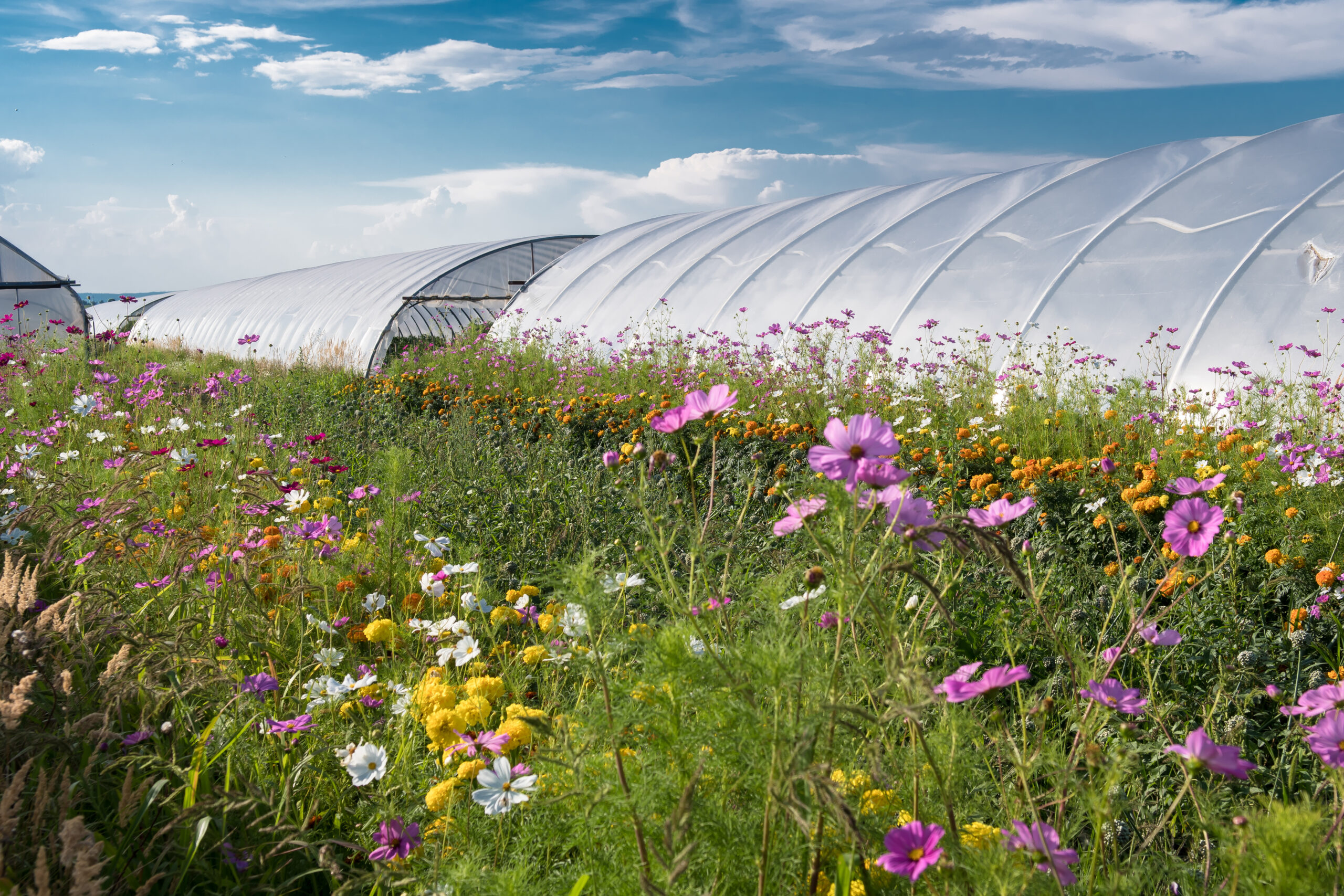
Diversity – preserve & promote
Whether through the protection of sensitive habitats or through renaturation, whether by means of biodiversity-promoting measures on company premises or in agricultural areas, whether in private or public spaces…
Biodiversity promotion happens on many levels.
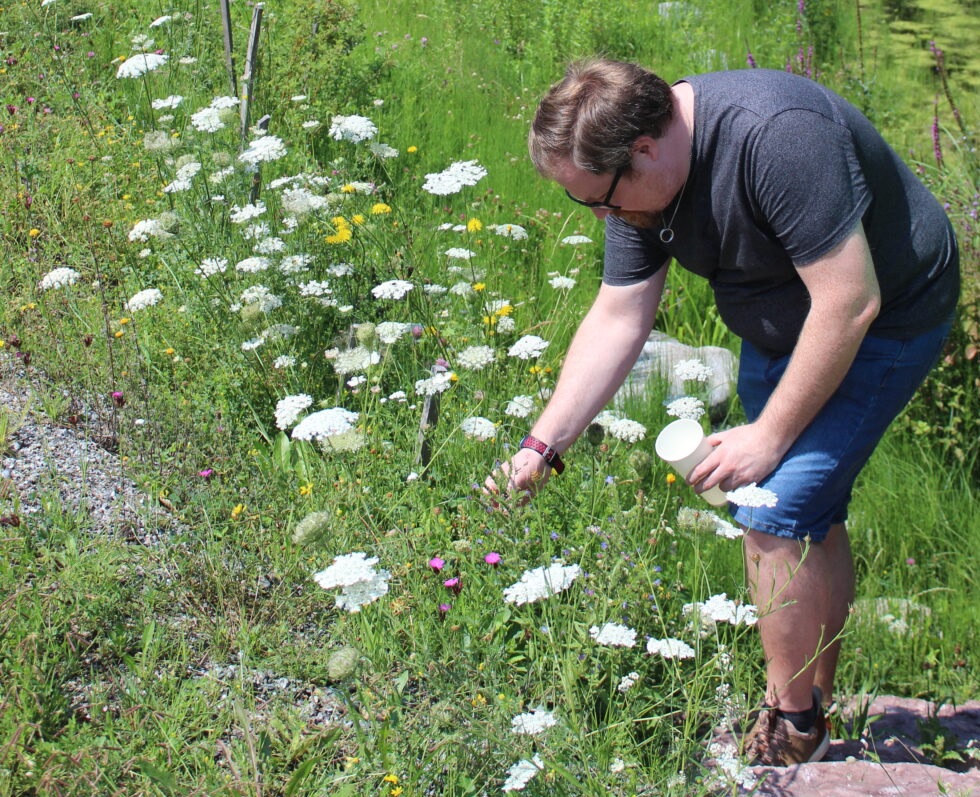
Measuring diversity
Innovative DNA analyses make it possible to measure existing biodiversity and verify the success of measures to promote species diversity.
- Biodiversity can be recorded from soil, plant or water samples.
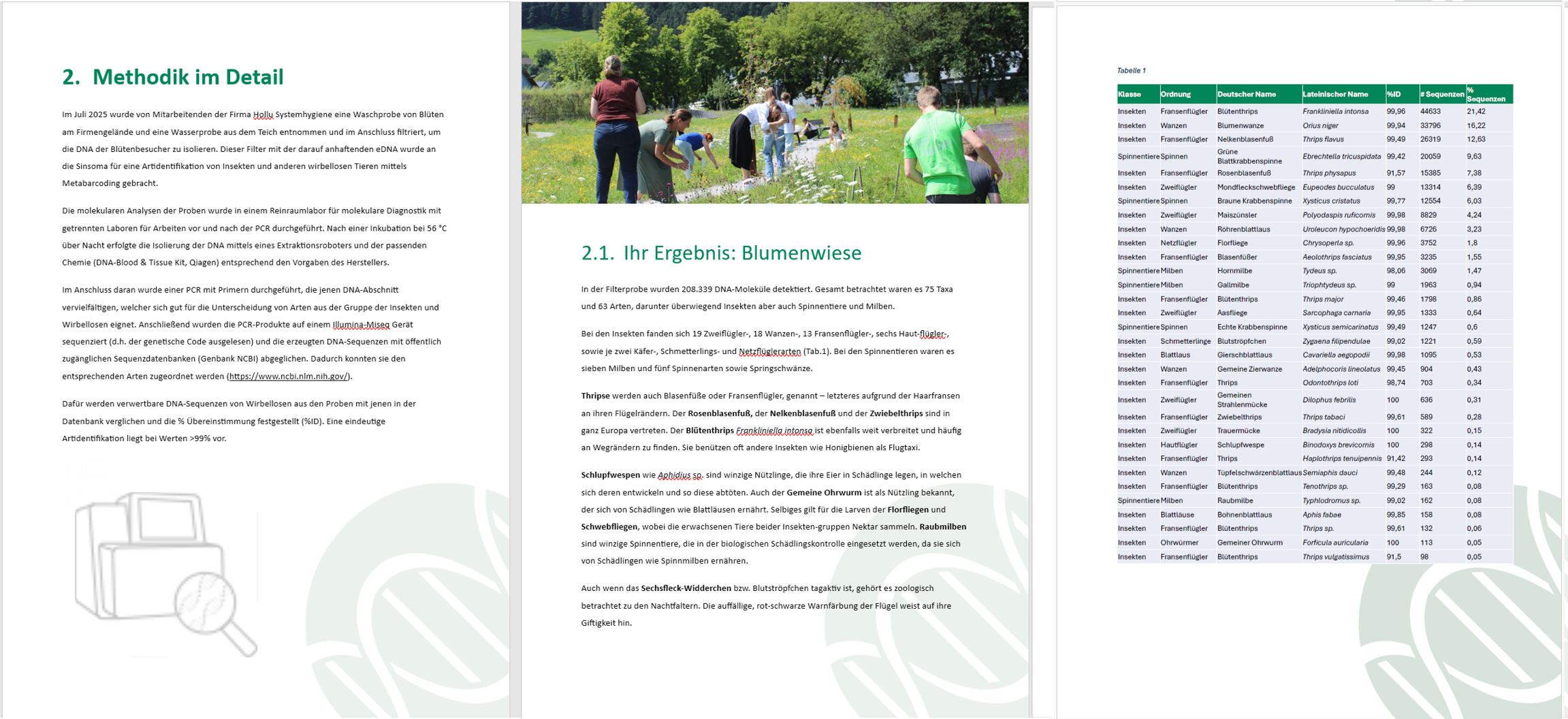
- Insect diversity can be determined from the DNA traces of flower visitors without having to catch the animals.
- Determining plant diversity from hay.
Different groups of organisms can be analysed from a single sample.
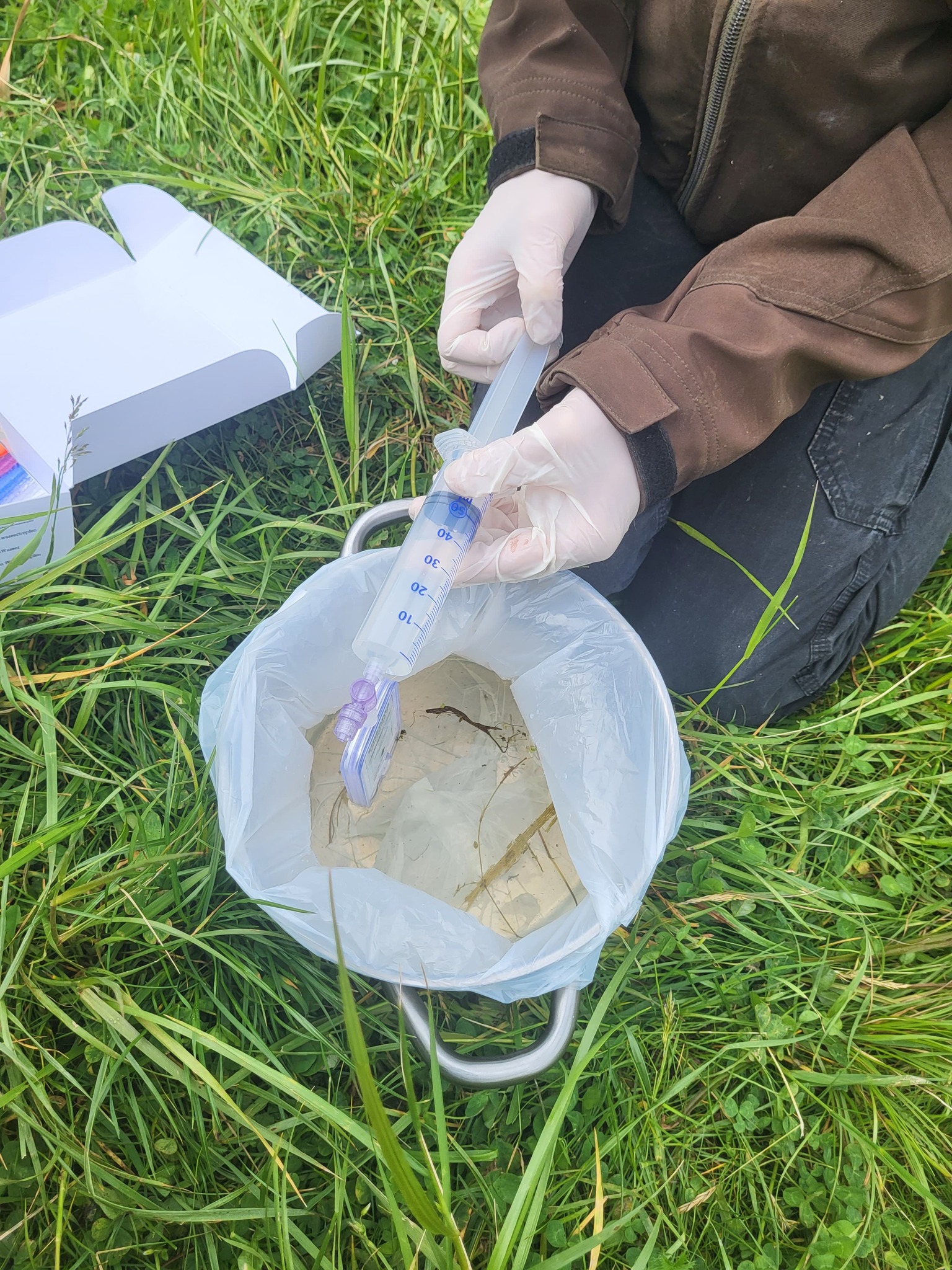
Simple sampling
Our handy kits in accordance with ISO 17805:2026 explain the sampling process step by step. This makes it easy for you to take the eDNA samples yourself.
Organise a team-building event or get citizen scientists on board to support your project.
DNA detectives on the go – an experience for nature lovers and tech enthusiasts alike.


Your result
We will provide you with a detailed overview of all living organisms found on your site.
- Scientific report
- Species table
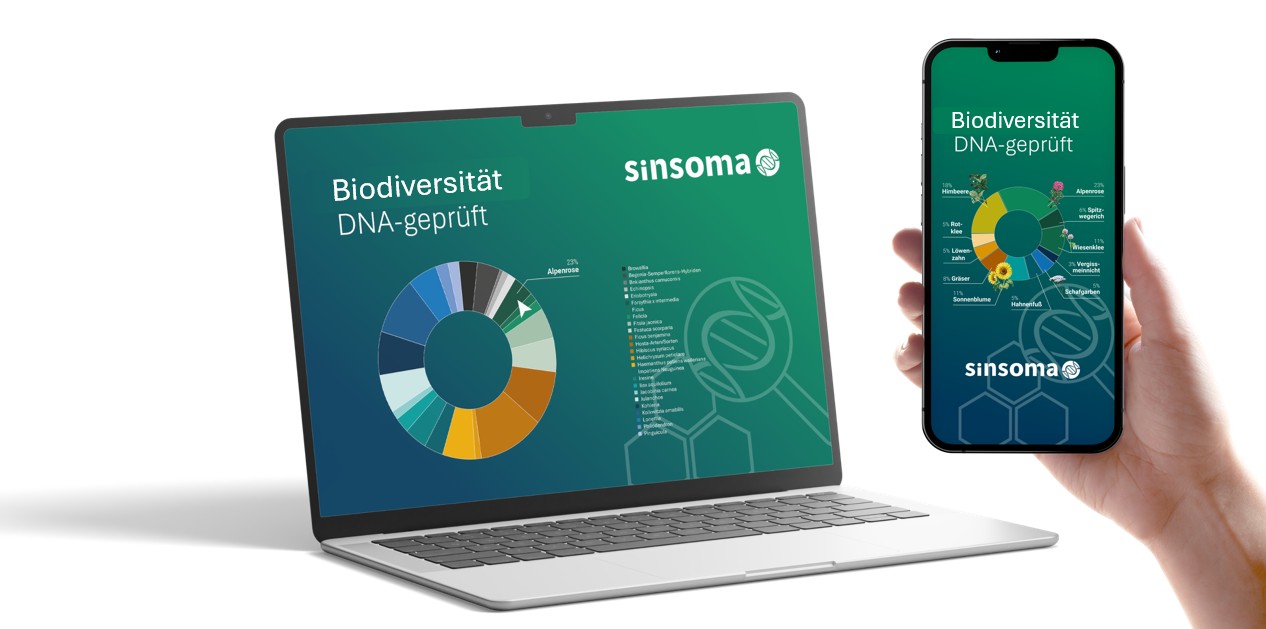
- Krona charts
- Illustrations of the organisms
This will enable you to take targeted measures to increase biodiversity.
On request, we can also issue you with a certificate that you can use to demonstrate the implementation of your measures, for example within the framework of the SDGs (Sustainable Development Goals). This allows you to clearly show which measures have been taken.
The DNA test is also suitable for continuously measuring the success of your measures and can show changes or stability in the ecosystem over a longer period of time.
We are also happy to advise you on promoting biodiversity.
Client testimonial
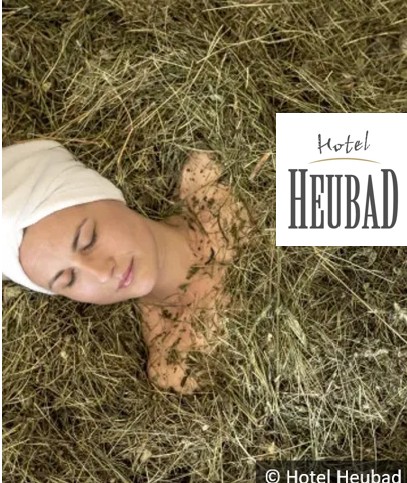

Classification:
Botanically highly diverse hay
The sample sent in by the Hotel Heubad in Völs am Schlern, South Tyrol, was analysed using DNA analysis to determine its species composition. Over 100 plant species were identified, including numerous valuable mountain herbs. This unique diversity underpins the hay’s health-promoting properties and bears witness to the rich alpine flora of the South Tyrolean Dolomites.

The Biodiversity Hub helps businesses to gain a structured understanding of biodiversity and to implement measures step by step. It provides a clear starting point, guides organisations towards specific areas for action, and brings together relevant information, solutions and market players in one place.
Through practical modules – ranging from biodiversity assessments to strategy and reporting – sustainability managers are provided with guidance and a sound basis for decision-making, particularly in the context of ESRS E4 and TNFD.
One tool – a wide range of uses
The results of the biodiversity analysis can be used in a variety of ways – for monitoring, documentation, reporting, and internal and external communication:
- Making biodiversity visible: Clearly communicating species diversity through results charts, species profiles, images and background information.
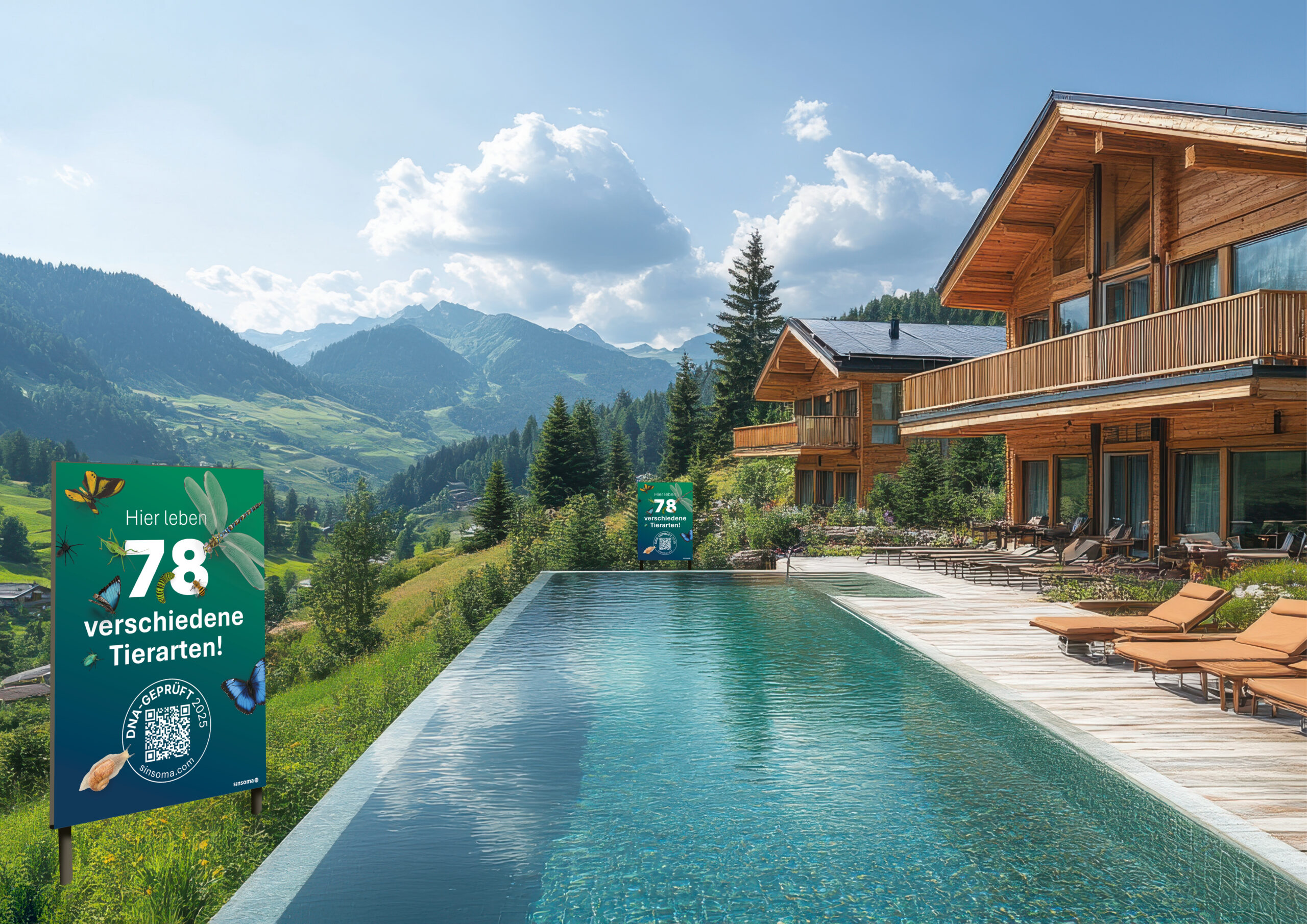
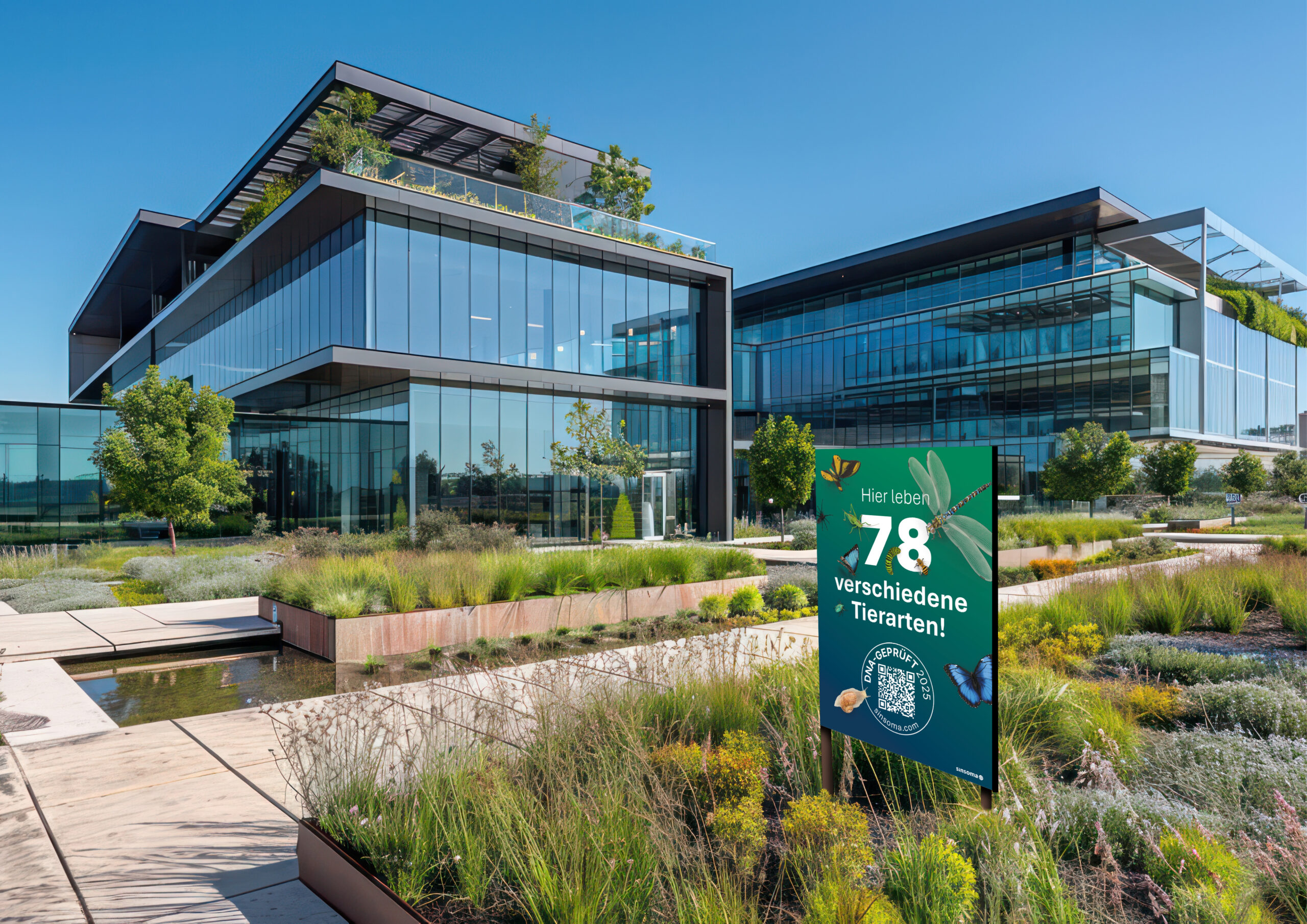
- Authentic content for 360° communication: Scientifically sound content for websites, social media, newsletters, sustainability communications, presentations and other marketing channels.
- Engaging staff, customers and partners: Bringing biodiversity to life, imparting knowledge and promoting the transfer of scientific findings.
- Underpinning sustainability communication: Objective biodiversity data can help to provide verifiable evidence for environmental and sustainability claims – including in the context of EmpCo and Green Claims.
- Supporting reporting: Biodiversity data can serve as an additional data source for relevant reporting targets and frameworks such as the SDGs and ESRS.
- Making success measurable: Track changes in biodiversity over time and assess the impact of measures to promote biodiversity.
- Enable targeted action: The insights gained help to plan and further develop measures in a targeted manner and to assess their impact.
- Strengthen corporate values and reputation: A visible commitment to biodiversity can make sustainability strategies tangible and strengthen credibility as well as the company’s image.
- Creating a strategic framework: The results can serve as a framework for activities and initiatives aimed at promoting biodiversity – ranging from individual measures to long-term corporate strategies.
One test, many possibilities: Don’t just use your biodiversity data for analysis; make natural diversity visible, raise awareness and transform scientific findings into valuable content, concrete measures and credible sustainability communication.
There are no limits to your creativity.

Order directly
-
DNA-test insect diversity
€ 298,80
Includes 20% MwSt.Plus shippingAdd to cart -
DNA-test plant diversity
€ 298,80
Includes 20% MwSt.Plus shippingAdd to cart -
DNA-test amphibians diversity
€ 322,80
Includes 20% MwSt.Plus shippingAdd to cart